

What Is Dental Bonding?
Key Takeaways
- Dental bonding uses a tooth-coloured resin that the dentist shapes onto your tooth and hardens with a special light.
- After assessment, bonding may suit minor chips, superficial cracks, small cosmetic gaps, and some discolouration.
- A visit often takes 30 to 60 minutes per tooth, and you can usually return to your day afterward.
- Bonding can last several years, but resin can stain or chip and may need repair or replacement.
A small chip, gap, or area of discolouration can change how a tooth looks. South Ancaster Family Dental offers bonding as part of its family dental services in Ancaster. An assessment helps establish whether the concern is cosmetic or needs another kind of treatment.
Dental bonding uses tooth-coloured composite resin that is shaped onto a tooth and hardened with a curing light. It is one of several cosmetic options for minor repairs. If you are considering teeth whitening too, discuss the order of treatment before choosing the resin shade.
How Tooth-Coloured Resin Repairs Your Smile
The resin starts out soft, with a texture like putty. The dentist shapes it right onto your tooth to fill in a chip or smooth an uneven edge.
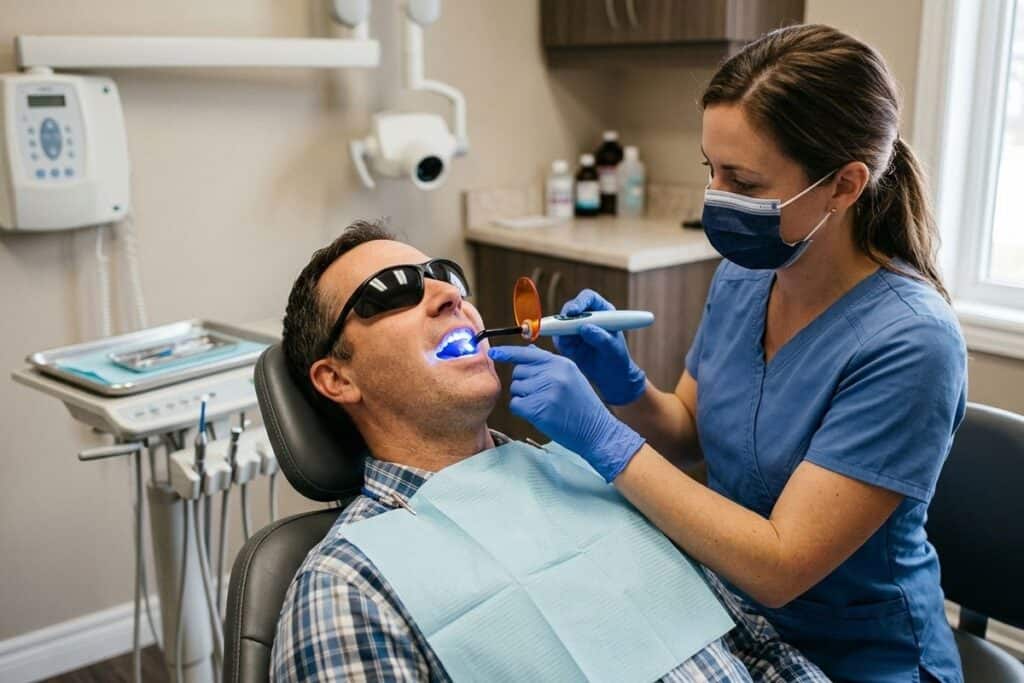
Once the shape looks right, a special light hardens the resin in place.
The resin shade is selected to blend with the surrounding teeth. The dentist then shapes and polishes the repair to achieve an appropriate contour and finish.
Who Is a Good Fit for This Treatment?
Signs You May Benefit
Bonding may be suitable for minor cosmetic concerns after your tooth has been assessed. Examples include:
- A minor chip or superficial crack that your dentist considers suitable for bonding.
- A small cosmetic gap between teeth, where adding resin is appropriate.
- Discolouration that your dentist considers suitable to cover with resin.
When Another Option May Suit You
Larger damage, decay, or a deeper crack may need another treatment. A crown may help restore a substantially damaged tooth, while veneers may be considered for some broader cosmetic changes.
Bonding can change a tooth’s shape or close a small cosmetic gap by adding resin. It does not move teeth or correct bite problems.
What Happens at Your Appointment?
Step-by-Step Process
A bonding visit follows a few clear steps:
- The team picks a resin shade that matches your teeth.
- The dentist gently preps the tooth surface and applies the resin.
- The dentist shapes the resin, hardens it, and polishes it smooth.
How Long Your Visit Takes
Bonding often takes about 30 to 60 minutes per tooth, depending on the size and complexity of the repair. The team can explain the expected appointment length after assessing your needs.
For small repairs, numbing often isn’t needed. That means you can usually head back to work, school, or errands right afterward.
How to Care for Your Bonded Teeth
Daily Habits at Home
Bonded teeth need the same care as the rest of your smile. Brush twice a day and floss once a day to keep the area clean.
Your other habits matter too. Try to avoid biting your nails, chewing on pens, or crunching ice. Limiting coffee, tea, and red wine can also help reduce stains on the resin.
How Long Results Can Last
Bonding often lasts several years, depending on the repair, bite forces, and oral habits. Resin can chip or stain, and it may eventually need a touch-up or replacement. Regular cleanings and exams give the team a chance to check it.
Contact the dental team if a repair feels rough, breaks, or changes how your teeth meet. An assessment can determine whether it needs polishing, repair, or another approach.
Common Questions About Bonding
How Does the Treatment Feel?
Most people feel little to no discomfort. Your tooth may feel slightly different at first as you get used to the new surface.
What Ages Can Get This Treatment?
Bonding may be an option for a child with a chipped tooth or for a teen or adult with a minor cosmetic concern. The dentist needs to assess the tooth and the person’s needs before recommending treatment.
Should You Whiten Your Teeth First?
Resin does not change colour with teeth whitening. If you want a brighter shade, discuss whitening before bonding so the resin can be matched to the intended result. Ask the team how the treatments should be scheduled.
Discuss Dental Bonding in Ancaster
South Ancaster Family Dental can assess a chipped or discoloured tooth, discuss a small cosmetic gap, and explain whether dental bonding or another treatment is appropriate. Contact our Ancaster office to book an assessment and talk through your options.