

Water Flosser vs. Floss: Which Is Better?
Key Takeaways
- CDA-accepted water flossers have demonstrated plaque removal and reduced gingivitis.
- String floss lifts sticky plaque from the sides of each tooth and costs very little.
- Water flossers can be handy around braces, bridges, and dental implants.
- Different people in a household may prefer different tools; one person does not automatically need to use both.
- Choose a suitable tool you can use effectively and consistently.
A toothbrush cannot clean every surface between your teeth. At South Ancaster Family Dental, an exam and cleaning gives you an opportunity to discuss how to reach those areas at home, whether you use string floss, a water flosser, or another suitable tool.
Neither is better for everyone: string floss is best for scraping sticky plaque from tight spaces between teeth, while a water flosser is easier to use and works especially well around braces, bridges, implants, and sensitive gums. The best choice is the one you’ll use every day, and your dental team can help you decide based on your teeth and dental work.
What Is a Water Flosser?
A water flosser directs pulses of water between teeth and along the gumline. CDA-accepted water flossers have demonstrated that they can remove plaque and reduce gingivitis when used as directed.
Many people find it handy around braces, bridges, and dental implants, where threading string floss can feel awkward.
It may also be easier to handle if limited dexterity makes string floss difficult. Follow the device instructions and ask for help with technique if you are unsure.
What Are the Benefits of String Floss?
As you guide the thin strand between two teeth, string floss lifts sticky plaque from the sides of each one. It’s a simple tool that does a focused job.
String floss is inexpensive and portable. Guide it gently between teeth, curve it around the side of each tooth, and move it carefully along the surface rather than snapping it into your gums.
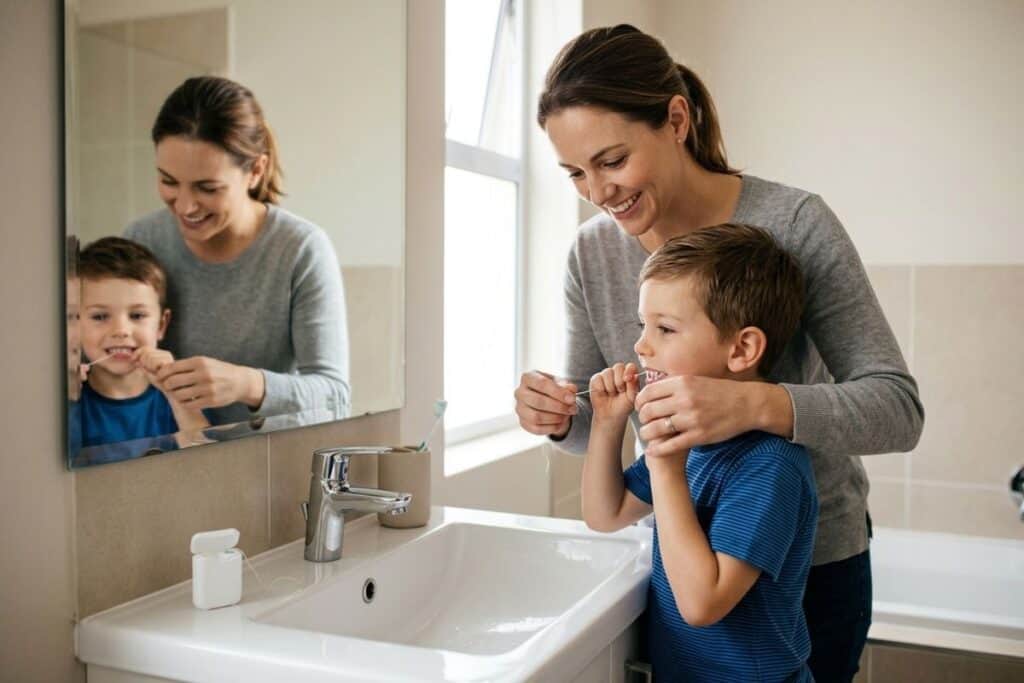
Children may need a parent or caregiver to do the cleaning until they can use floss effectively themselves.
Key Differences Between a Water Flosser & Floss
Each tool has its own strengths. Here’s how they compare in three areas that matter to families.
Plaque Removal & Gum Health
Both tools can help clean areas a toothbrush misses. String floss cleans through contact with tooth surfaces; a water flosser uses pulses of water. CDA-accepted water flossers have demonstrated plaque removal and reduced gingivitis, not just removal of trapped food.
Your dentist can help you choose an appropriate method and check your technique. Do not assume that one tool is better for every mouth or that using both is always necessary.
Cost & Ease of Use
A roll of floss costs little, while a water flosser costs more upfront. If your hands feel sore or stiff, a water flosser may feel easier to hold and guide.
Consider storage and upkeep too. String floss needs little space; water flossers vary in size and need cleaning according to the device instructions.
Braces and Other Dental Work
For patients who already wear braces, water flossers may make cleaning around brackets and wires easier. Follow your treating orthodontist’s instructions. Around crowns, bridges, or implants, ask your dental team which tools and techniques are appropriate.
How to Choose the Right Option for Your Family
The right fit depends on who’s using it, and these points can help you decide:
- Choose a tool that the person can use safely and effectively, with help when needed.
- Consider grip and dexterity if handling string floss is difficult.
- Ask how to clean around bridges, implants, or other dental work.
Household preferences may differ: one adult might choose string floss while another finds a water flosser easier. That is different from one person needing both tools. Ask your dental team whether an additional tool would help in your situation.
The aim is effective daily cleaning with a method that suits your mouth, rather than buying more tools.
Common Questions About Water Flossers & Floss
How Often Should You Floss Each Day?
Once a day helps keep your gums healthy. Pair it with brushing twice daily, and choose a time that fits your routine, such as right before bed.
What Age Can Kids Start to Floss?
You can start once two teeth touch side by side. Little hands need guidance at first. Help your child until they can floss alone.
How Can the Dental Team Help?
The team can show your family simple floss tips during a visit. Regular exams and cleanings support healthy gums alongside your routine at home.
Bring questions about difficult-to-reach areas, soreness, or a device you are considering. The team can discuss technique and options suited to your needs.
Book an Exam and Cleaning in Hamilton
Water flossers and string floss can both support cleaning between teeth. The choice depends on effective technique, your dental needs, dexterity, and what you can use consistently.
Book an exam and cleaning at South Ancaster Family Dental to discuss your home care routine.
Our Hamilton team can assess your teeth and gums and help you choose suitable cleaning tools and techniques.