
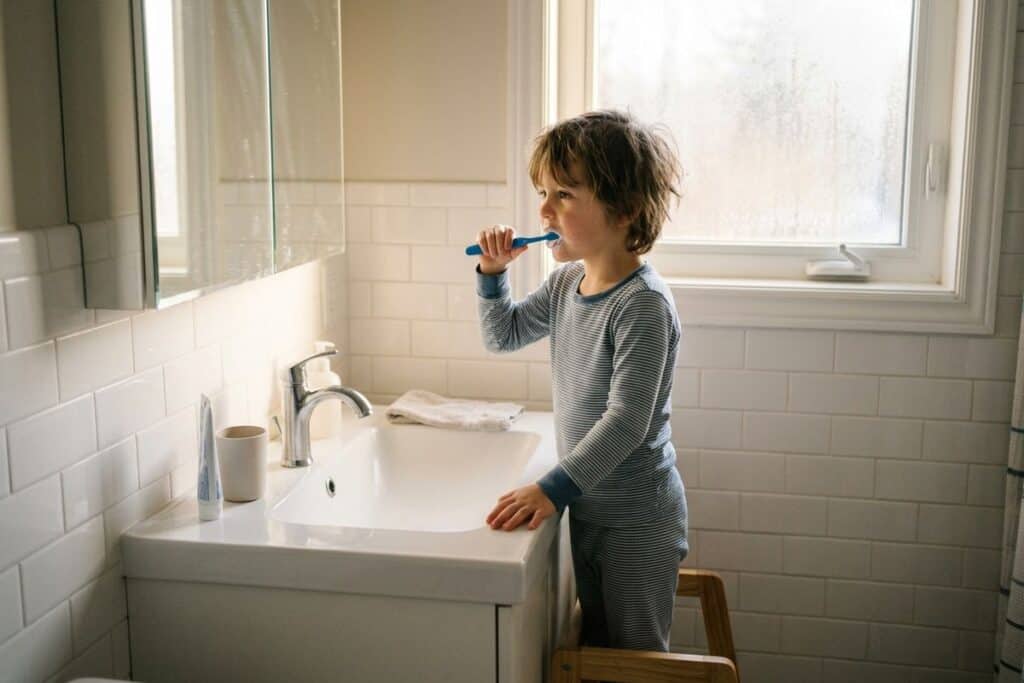
Should You Brush Your Teeth Before or After Breakfast?
Key Takeaways
- Brushing before breakfast removes overnight bacteria and coats teeth with fluoride before food exposure.
- If you brush after breakfast, wait at least 30 minutes, especially after acidic foods like orange juice.
- Acidic foods temporarily soften enamel, and brushing too soon can wear it down over time.
- Consistency matters more than perfect timing. Pick a routine your family can stick to every day.
- Rinsing your mouth with plain water right after eating can help move acid off your teeth while you wait.
Most families have a morning routine that runs on autopilot. Wake up, get dressed, eat breakfast, brush teeth, and head out the door. It feels like a logical order. But when it comes to your teeth, the timing of that brushing step actually matters more than most people realize. South Ancaster Family Dental often fields this exact question from families who want to make sure their daily habits are actually working in their favour.
Brushing before breakfast is generally the better option for your enamel, but the right answer for your family depends on what you eat and how consistently you can make brushing a habit. If you are ever unsure whether your current routine is protecting your teeth, a family dental checkup is a good place to start.
The Case for Brushing Before Breakfast
What Happens in Your Mouth Overnight
While you sleep, your saliva production slows down significantly. Saliva is what helps rinse away bacteria and keep your mouth’s acid levels balanced throughout the day. With less saliva working overnight, bacteria multiply along your gum line and across the surface of your teeth. That stale taste and morning breath you wake up with? That is those bacteria at work.
Going straight to breakfast without brushing means those bacteria get to interact with everything you eat and drink. Food gives them fuel, and they produce acid as a byproduct. That acid is what gradually breaks down tooth enamel over time.
How Brushing First Protects Your Teeth
Brushing before you eat does two useful things. First, it clears away the bacteria that built up overnight, so they’re not sitting on your teeth when food arrives. Second, fluoride toothpaste leaves a thin protective layer on your enamel before it comes into contact with food and drink.
Think of it like applying sunscreen before going outside rather than after you have already been in the sun. The protection is in place when it is needed most.
The Case for Brushing After Breakfast
Brushing after breakfast is one of the most common family habits, and it makes intuitive sense. Your mouth feels cleaner, and you are removing any food particles left behind from the meal. While there is a catch with timing, many people prefer this approach because:
- It feels more satisfying to start the day with a fresh mouth after eating.
- It removes food debris and residue that collects during breakfast.
- For many families, it fits more naturally into the morning schedule.
Why Timing Matters for Your Tooth Enamel
Acidic Foods & Your Teeth
Orange juice, fruit, yogurt, and even coffee are all common breakfast staples. They are also acidic. When you eat or drink something acidic, it temporarily softens your enamel. Enamel is the hard outer layer that protects your teeth, and once it wears away, it does not come back.
Brushing while your enamel is in that softened state adds friction at exactly the wrong moment. Over months and years, that repeated friction can contribute to visible enamel wear and increased tooth sensitivity.
The 30-Minute Rule
If brushing after breakfast is part of your routine, wait about 30 minutes before picking up your toothbrush. That window gives your saliva time to naturally neutralize the acid from your meal and allows your enamel to firm back up.
In the meantime, rinsing your mouth with plain water right after eating can help move acid off your teeth while you wait. It’s a simple step, but it makes a real difference.

Brushing Habits That Work for the Whole Family
Tips for Kids’ Morning Routines
For kids, the best brushing routine is the one that actually happens every day. Brushing before breakfast can work well for busy families because it happens before the morning rush begins. Once breakfast, backpacks, and school drop-off start, brushing can be easier to forget.
Children also need a little help making sure they are brushing properly. Kids under 8 should usually be supervised so an adult can check that they’re reaching all surfaces and not using too much toothpaste.
For children under 3, use a rice-grain-sized amount of fluoride toothpaste. For children aged 3–6, use a pea-sized amount. Older children can continue with a pea-sized amount while they build good brushing habits.
If your child eats breakfast after brushing, having them rinse with water afterward can help wash away food particles and reduce acid on their teeth before they head out for the day.
Other Habits That Support Oral Health
Brushing is just one piece of a daily routine. A few other small habits can help protect your teeth between brushing sessions:
- Rinse your mouth with water after meals to reduce acid and food particles.
- Swap highly acidic drinks at breakfast for water or lower-acid alternatives when possible.
- Floss at least once daily to remove plaque from between your teeth where a brush can’t reach.
When to Talk to a Dentist
Most people never give their brushing timing a second thought until a problem shows up. If you notice any of the following, it’s worth bringing up at your next dental visit:
- Tooth sensitivity when eating or drinking hot, cold, or sweet foods.
- Visible wear on the edges of your teeth or changes in colour.
- Uncertainty about what oral care routine works for your family’s needs.
Keep Those Smiles Healthy
Your brushing routine does not have to be perfect. It just has to be consistent and gentle on your enamel. If you are not sure whether your family’s habits are helping or causing issues like sensitivity, our trusted team at South Ancaster Family Dental in Hamilton can help you sort it out. We’ll take a look, answer your questions, and recommend simple changes that fit your daily routine.
Book an appointment today to keep your family’s smiles healthy.