
What Causes Tooth Enamel to Wear Down?
Key Takeaways
- Tooth enamel is the hard outer layer that protects your teeth, and it cannot grow back once it is gone.
- Acidic foods, drinks, and internal sources like acid reflux are common causes of enamel erosion.
- Simple daily habits, like rinsing with water and waiting before brushing, can help slow damage.
- A dentist can catch enamel wear early and recommend treatments to protect your teeth going forward.
What Tooth Enamel Actually Does
You bite into something cold, and your teeth ache. You sip something sweet, and you feel that familiar sharp twinge. These sensations might be your teeth telling you that your enamel is wearing down.
Tooth enamel is the hard outer layer of your teeth. Once the enamel is gone, your body cannot replace it. Enamel acts as the first line of defence against the acids in your food and drink. When it erodes, the softer layer underneath becomes exposed, causing sensitivity and discomfort. At South Ancaster Family Dental, we offer family dental care that includes early detection of enamel wear before it becomes a bigger problem.
Signs Your Enamel May Be Wearing Down
Early Warning Signs
Sensitivity to hot, cold, or sweet foods is often one of the first signs that your enamel has thinned. You might also notice your teeth looking more yellow than they used to. This happens because the yellowish layer underneath the enamel, called the dentin, starts to show through as the outer surface wears away.
Rough or chipped edges on your teeth are another thing to watch for. These small changes are easy to miss, but catching them early gives you a much better chance of protecting your teeth.
Signs of More Advanced Wear
As enamel erosion progresses, you may notice small dents or cupping on the biting surfaces of your teeth. These are signs that the damage has moved beyond the surface level.
Cavities and cracks can also form more easily when enamel is thin. At this stage, seeing a dentist can help put the right treatment in place before things get more complicated. You can also learn more about restorative dentistry options that address damage caused by enamel wear.
Common Causes of Enamel Erosion
What You Eat & Drink
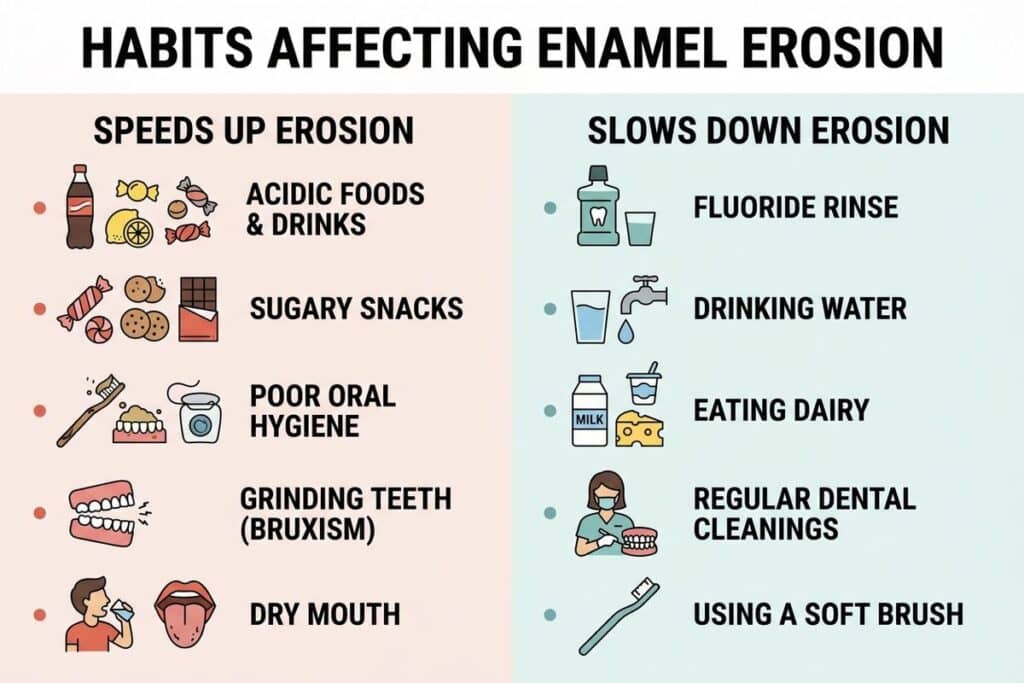
Soft drinks, fruit juices, and sports drinks are some of the biggest contributors to enamel erosion. They are highly acidic, and when you sip them throughout the day, your teeth are in near-constant contact with that acid. Sour candies and high-sugar snacks work the same way.
Frequent sipping keeps acid levels elevated in your mouth for longer, which gives enamel less time to recover between exposures. Tooth enamel loss from acidic foods and drinks is one of the more common and preventable causes of dental damage.
Internal Sources of Acid
Acid does not only come from your diet. If you have acid reflux or GERD, stomach acid can travel up into your mouth and sit on your teeth. Over time, this can cause just as much damage as a sugary diet.
Dry mouth is another factor. Saliva naturally neutralizes acid and helps protect enamel. When saliva production drops, whether from certain medications or other causes, its protective effect is reduced.
How to Protect Your Enamel at Home
Daily Habits That Help
A soft toothbrush with fluoride toothpaste is a straightforward way of protecting your teeth. Fluoride helps strengthen enamel, and a soft brush avoids adding extra wear. After eating or drinking something acidic, rinse your mouth with plain water right away.
One habit that surprises many people is waiting about 30 minutes before brushing after acidic foods or drinks. Acid temporarily softens enamel, and brushing while it’s in that state can actually wear it down faster.
Smart Diet Swaps
Drinking through a straw can help reduce how much acid comes into direct contact with your teeth. Replacing sugary drinks with plain water is one of the most straightforward changes you can make. Calcium-rich foods can also help support tooth strength as part of a balanced diet.
For more practical tips on keeping your teeth healthy between visits, the Mouth Healthy resource for adults covers brushing techniques, cavity prevention, and how daily habits affect your oral health.
How a Dentist Can Help With Enamel Wear
Treatment Options Worth Knowing
When enamel has already thinned, a dentist has several ways to help. Fluoride varnish applied during a visit can help strengthen weakened areas and reduce sensitivity. For teeth that have already been damaged, options like crowns, fillings, or veneers can restore both appearance and function.
If teeth grinding is a concern, a custom mouthguard worn at night can help protect what enamel remains from further wear.
Regular Checkups & Early Detection
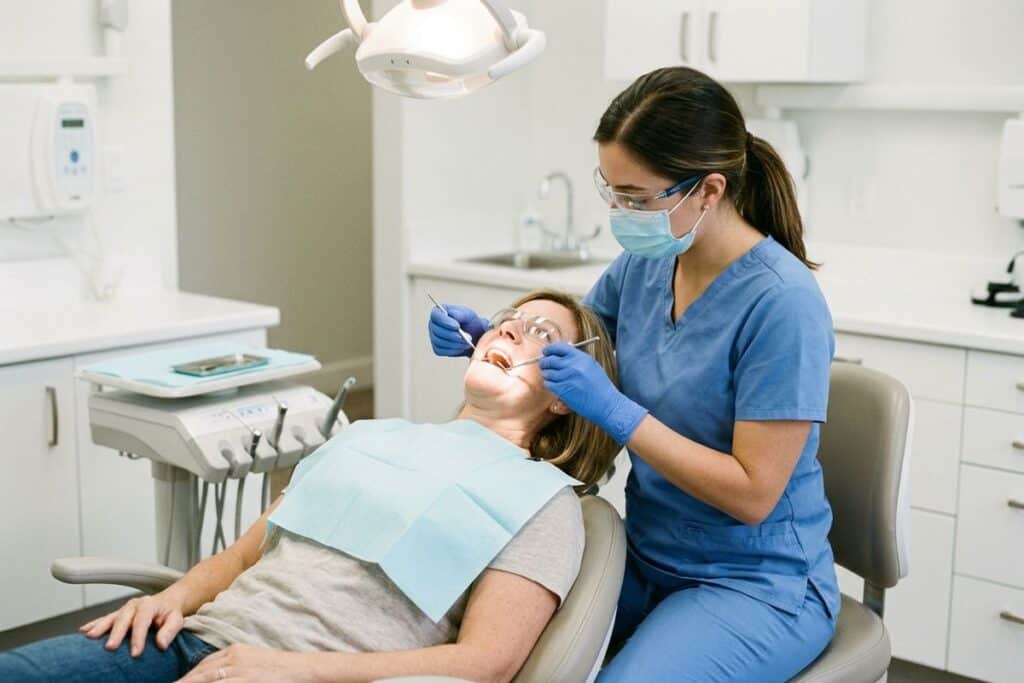
Enamel erosion tends to progress slowly, which means that it can be easy to miss until significant damage has already occurred. Regular dental checkups allow our team to spot early signs of wear before they become bigger problems. At South Ancaster Family Dental, our team can assess the condition of your enamel and help you figure out the right way to protect your teeth. If you have noticed sensitivity, discolouration, or any of the signs mentioned here, reaching out to book an appointment is a good place to start.