

Why Do My Teeth Feel Sensitive After a Cleaning?
You leave the dental office with that smooth, fresh feeling on your teeth. But later that day, you take a sip of cold water and feel a sudden, sharp twinge. It can be confusing to experience tooth sensitivity right after a professional cleaning, a procedure meant to improve your oral health.
This discomfort is a common and usually temporary reaction. Tooth sensitivity after a cleaning is a normal response to the removal of plaque and tartar, which temporarily exposes parts of your teeth that were previously covered. Our team at South Ancaster Family Dental offers comprehensive family dental care and can help you understand why this happens and manage the sensation until it fades.
What Causes Sensitivity After a Dental Cleaning?
Exposed Dentin & Roots
During a cleaning, your gums may be slightly pushed back, exposing the lower parts of your teeth near the roots. This area is covered by dentin, a softer layer than your tooth enamel. Dentin contains tiny tubes that lead to the tooth’s nerve, making it more sensitive to temperature and pressure.
Unlike the crown of your tooth, which is protected by hard enamel, the roots are not. When the layer of tartar is removed from these areas, the dentin is suddenly exposed to new sensations, which your nerves register as sensitivity.
Tartar Removal
Hardened plaque, or tartar, can act like a blanket over your teeth, insulating them from hot, cold, and sweet stimuli. When your hygienist carefully removes this buildup of hardened plaque, the newly uncovered tooth surface is exposed to your mouth’s environment again. This new exposure can cause temporary sensitivity as your teeth adjust.
The Cleaning Process & Tools
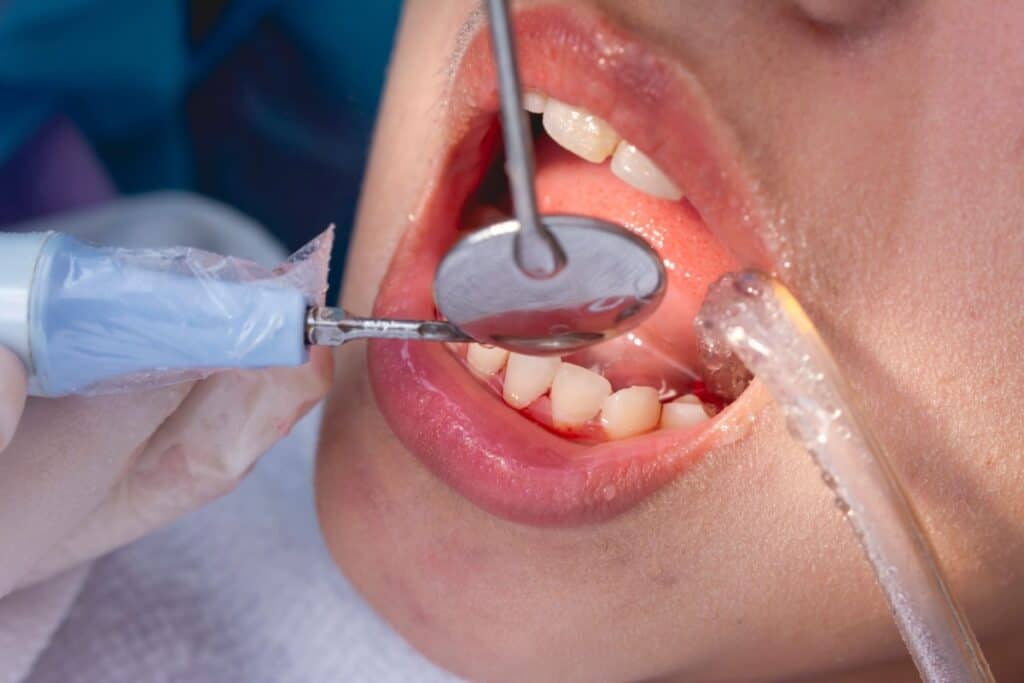
Dental professionals use specific tools to give your teeth a thorough cleaning. The vibrations from a dental scaler, the gentle pressure used to remove plaque, and the fine grit in polishing paste can all contribute to temporary sensitivity. These actions stimulate the teeth and can make the nerves feel more reactive for a short time.
Regular Clean vs. a Deep Clean & Sensitivity
A Regular Professional Clean
A routine dental cleaning focuses on the surfaces of your teeth above the gumline. The main goal is to remove plaque and tartar buildup and to polish your teeth. Any sensitivity you feel after this procedure is typically mild and usually resolves within a day or two.
A Deep Clean for Gum Health
A deep clean, also known as scaling and root planing, is different. This procedure cleans below the gumline to treat the early stages of gum disease. Because it involves more intensive work around the tooth roots, you may experience more noticeable and longer-lasting sensitivity as your gums heal.
How Long Does Post-Clean Sensitivity Last?
For most people, any discomfort after a dental cleaning is short-lived. Your teeth are simply adjusting to being free of tartar. This adjustment period allows your teeth to acclimate to their newly cleaned state. Over a few days, your saliva helps to remineralize the tooth surfaces, and the tiny tubes in the dentin can begin to seal off naturally. This process reduces how much outside sensations can reach the nerve.
You can typically expect the sensitivity to:
- Last for only a few days
- Extend up to a week in some cases
- Improve gradually with each passing day
How to Manage Tooth Sensitivity at Home
Choose the Right Dental Products
You can take simple steps to soothe your teeth. Using a toothpaste specifically made for sensitive teeth can help block the sensations from reaching the nerve. Brushing gently with a soft-bristled toothbrush also helps you avoid irritating your teeth and gums further.
Adjust Your Diet Temporarily
What you eat and drink can make a difference. For a few days after your cleaning, it can help to avoid foods and drinks at extreme temperatures, like ice cream or hot coffee. You may also want to limit acidic or sugary items, as they can sometimes trigger sensitivity.
When to Contact Your Dentist
While temporary sensitivity is normal, certain signs suggest you should follow up with your dental team. A conversation with your dentist is a good idea if you experience any of the following:
- Sensitivity that lasts for more than 2 weeks
- Pain that feels sharp, constant, or severe
- Swollen, tender, or bleeding gums that don’t improve
Gentle Care for Sensitive Smiles
A professional cleaning is a key part of maintaining your oral health. If you have concerns about sensitivity or any other aspect of your dental care, our team at South Ancaster Family Dental can provide guidance.
Contact our office to discuss your needs or to schedule your next appointment.