

How Long Do Dentures Last?
Dentures are a common solution for replacing missing teeth, but how long do they last? In general, dentures can last between 7 and 10 years. Sometimes, dentures need to be refitted. Replacement dentures are also necessary for most patients at some point.
Understanding the lifespan of dentures, how to care for them, and when to seek professional attention can help you maintain a healthy mouth and smile for years to come. If dentures are not right for you, there are other options for managing missing teeth.
What Are Dentures?
Sometimes, people lose their teeth due to accidents or serious decay. Dentures, colloquially known as “false teeth,” are custom-made appliances designed to restore the look and function of natural teeth and gums.
Both partial and complete dentures are removable, so you can take a break from them while you sleep. This also makes them easier to clean. Caring for your dentures is important because, just like natural teeth, they are susceptible to oral health issues.
Types of Dentures
There are two main types of dentures: partial dentures and complete dentures.
- Partial dentures: These are suitable for people who have lost some (but not all) of their natural teeth. In these patients, the remaining natural teeth are not capable of holding a dental bridge. A partial denture is held in place by clasps that go around natural teeth nearby.
- Complete dentures: Designed for those missing all their natural teeth, complete dentures sit on top of your gums and are attached to the mouth through suction. They can be removed, however, for convenient cleaning and sleeping. Complete dentures often take some time to get used to.
Lifespan of Dentures
On average, dentures last between 7 and 10 years. Most people will require replacement dentures at some point.
According to the Canadian Dental Association, you should get a dental check-up for your dentures every year. Our mouths change, so adjustments and relining are important to help maintain well-fitted dentures and good oral health. If your dentures do not fit, you may also experience denture sores. The presence of these sores can make it harder to detect oral cancer.
How to Care for Your Dentures
The quality and fit of your dentures matter, but day-to-day maintenance habits are important too. Understanding how to care for your dentures not only helps you maintain good oral health, it also helps protect your investment.
The Importance of Cleaning Your Dentures
Cleaning your dentures every day is important. If you do not clean your dentures, plaque and tartar deposits can build up just as they would on natural teeth. Plaque and tartar can lead to gum disease, cavities, bad breath, and staining. So care for your dentures as you would your natural teeth. They do a similar job!
How to Clean Your Dentures
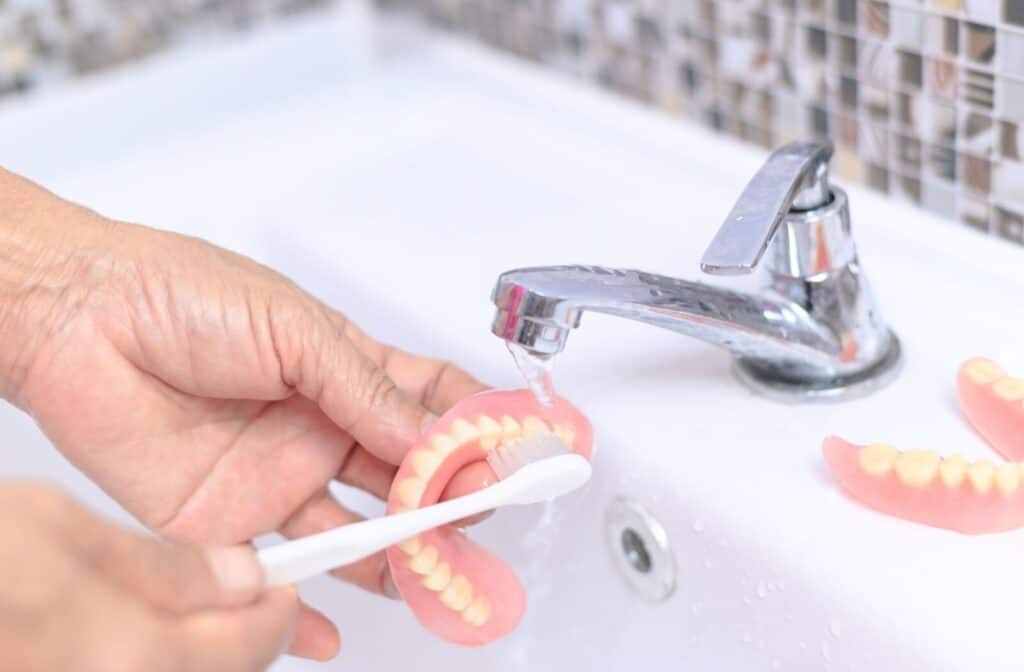
First, remove your dentures. Rinse them under running water to wash off any large bits of food. Then, use a soft toothbrush or a dedicated denture brush to clean the dentures. Be sure to use either a mild liquid soap or a denture cleaning solution designed for this purpose, as regular toothpaste can damage dentures.
Gently brush every surface of the denture, including crevices and clasps—bacteria tend to gather in these hard-to-reach areas. Avoid bending or stressing the material. Finally, rinse your dentures with clean, running water before placing them back into your mouth.
How to Handle Your Dentures
Dentures are fragile. The Canadian Dental Association recommends holding your dentures over a sink of water or while standing on top of a soft surface (like a towel) in case you drop them.
While you sleep, you can soak your dentures in warm water—never hot. Always keep your dentures in water when you are not using them; this keeps them from changing shape.
Caring for Your Mouth
After you clean your dentures, massage your gums with a soft-bristle brush. You can also wrap some clean cloth around your finger, moisten it, and massage your gums. Make sure to brush and floss any natural teeth you may have. Remember to brush the roof of your mouth, inside your cheeks, and your tongue.
Can You Sleep with Dentures In?
Sleeping with your dentures is not recommended because taking them out at the end of the day can give your mouth a much-needed break. Aim to leave your dentures out at least 8 hours a day. Doing so helps prevent the build-up of germs and can help maintain the strength of your jawbone.
When to See a Dentist About Dentures
Our mouths change throughout our lives, so your denture’s fit may change too. That is why regular dental check-ups are important. See your dentist at least once a year.
You should also see a dentist if your dentures:
- Hurt your gums
- Feel loose
- Make noise when you talk
- Are more than 10 years old
- Are damaged or have changed colour
Get Custom Dentures near Hamilton
Dentures can bring many benefits: they can restore the look of your facial structure, contribute to a more complete smile, and help you eat and talk more comfortably. Dentures can require adjustment time and a commitment to maintain them properly, but they can last up to a decade. Because they are removable, dentures are also relatively easy to clean and maintain.If you want to learn more about dentures and other restorative dentistry services near Hamilton, book an appointment at South Ancaster Family Dental today.