
Can You Get a Crown Without a Root Canal?
Restorative dentistry procedures include crowns and root canals. Crowns are used to restore the look and function of a tooth, while a root canal removes infected dental pulp from an abscessed tooth.
Crowns are used on teeth damaged by decay, but they can also be used to cover up chipped teeth, discolouration, or oddly shaped teeth. Therefore, root canals are not always necessary for a person who needs a crown. Talk to your dentist if you have questions about whether a root canal or a crown is right for you.
What Are Dental Crowns?
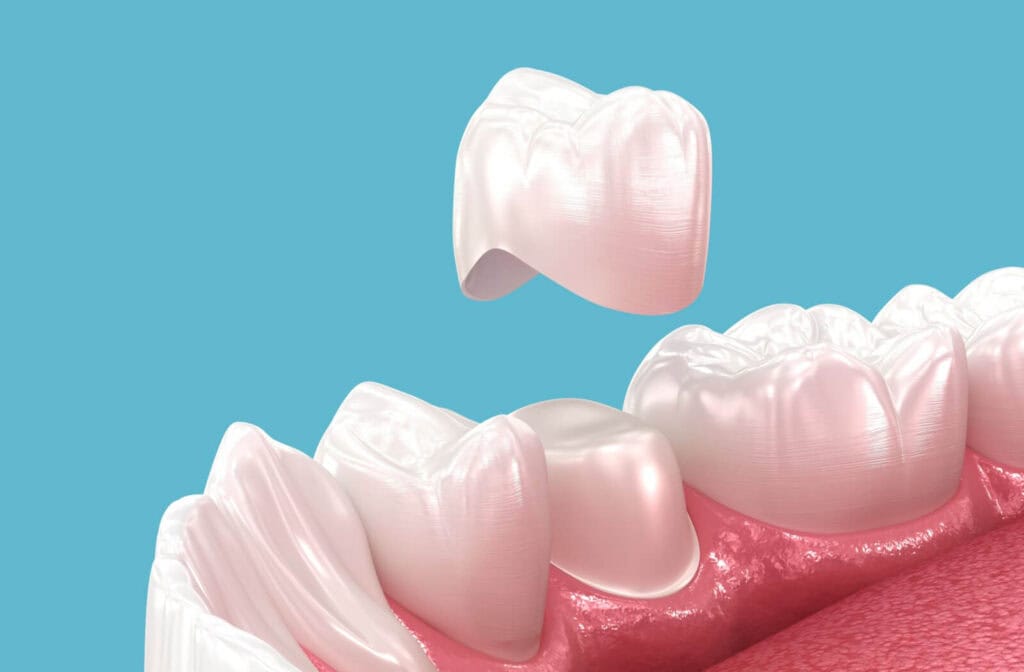
A dental crown is essentially a cap that goes over your tooth and covers up damaged, discoloured, or misshapen areas. They can be made of gold, porcelain, or composite materials and are designed to look and work like natural teeth. Cared for properly, a crown can last for a decade or more.
Reasons to Get a Dental Crown
While crowns are associated with root canals, there are many reasons to get a crown. These include:
- Restoring a tooth after a large filling, root canal, or dental implant
- Covering up stains, chips, oddly shaped teeth, or other damage
- Anchoring in place a dental bridge
- To strengthen teeth or protect them from being worn down
What Is a Root Canal?
A root canal is a procedure that removes infected or inflamed dental pulp from an abscessed tooth. Your dental pulp is inside the root canal system of your tooth and is full of blood vessels and nerves that promote your tooth’s development. If bacteria get into this space and infect it, a dentist can remove the infected pulp through a root canal.
Reasons to Get a Root Canal
Also known as endodontic therapy, root canals are used to treat abscessed teeth. Left untreated, an infection can spread to other teeth or even damage your jawbone.
During a root canal, a dentist opens up a tooth and cleans out the infected pulp (this is done under anesthesia). Then, the tooth is filled and sealed, sometimes with a crown to restore its appearance and natural function.
You may need a root canal if you experience the following symptoms:
- Persistent tooth pain, especially pain that radiates to other areas of your face and pain when something touches your teeth
- Gums that are inflamed, tender, or have pimple growth
- A tooth that has changed colour
- Loose teeth
- Swelling in the jaw

Getting a Crown Without a Root Canal
You might not need a root canal with a crown if you don’t have problematic pulp that requires removal. But if you have an abscessed tooth, a root canal can be an important treatment because it can potentially save the tooth from needing to be removed.
The Canadian Dental Association (CDA) and the Canadian Academy of Endodontics consider root canals to be safe and effective routine treatments for infected or inflamed pulp.
But if you want to avoid eventually needing a root canal, taking care of your oral health can help. This includes simple habits like:
- Brushing and flossing: The CDA recommends flossing every day and brushing at least once a day, ideally after every meal and definitely before going to bed.
- Regular dental exams: For many people, a dental cleaning every 6 months is ideal, but a dentist may suggest more or less frequent visits depending on an individual’s state of oral health.
If you are wondering whether a crown or a root canal is right for you, talk to your dentist. Your dentist can make a thorough assessment of your oral health and make personalized treatment recommendations.
What Is Restorative Dentistry?
Restorative dentistry refers to treatments intended to restore the way teeth naturally look and work. Restoring teeth like this can help keep your bite aligned.
In addition to crowns, treatments in the category of restorative dentistry include:
- Fillings: Made of materials like dental amalgam, gold alloy, or ceramic, fillings are used to restore the hole after a dentist treats a cavity caused by decay.
- Bridges: A bridge “bridges” an area of missing teeth. Typically, it is an artificial tooth anchored between 2 crowns.
- Dental implants: A dental implant is a titanium root inserted into the jawbone. A post and then a crown are added to the root to create an artificial tooth. Dental implants look and work much like natural teeth.
- Dentures: Full or partial dentures are artificial teeth and gums used when there are only a few teeth left. They can be removed at night for sleep.
Explore Restorative Dentistry in Ancaster
We understand that dental procedures can be a source of stress and anxiety for some people. Our goal at South Ancaster Family Dental is to provide a welcoming and comfortable space for our patients. Each room is outfitted with a television to help keep you entertained during dental procedures. Along with restorative dental services like crowns, bridges, and implants, we also offer cosmetic dentistry services like professional teeth whitening and routine checkups and cleanings. Contact us to book an appointment for you or your family today.