
How Often Should You Replace Your Toothbrush?
Key Takeaways
- Swap manual toothbrushes every 3 to 4 months and electric heads every 3 months.
- Watch the calendar and the bristles, not the colour of the brush.
- Frayed or curved bristles leave plaque behind and can wear your gums.
- Rinse well, store upright, and let the brush air dry between uses.
- Follow the 2-2-2 rule and book regular check-ups for the whole family.
You pick up your toothbrush twice a day without much thought. Over time, those soft bristles flatten out and stop cleaning as well as they used to.
For most people, a manual toothbrush needs replacing every 3 to 4 months, and an electric brush head every 3 months.
Go by the calendar, not the colour. A brush can look fine while the bristles have already lost their shape. Children often chew or press hard on their brushes, so you may need to swap theirs sooner.
While staying on top of your home care is vital, your toothbrush is only one part of the equation. Remember to come in for your routine check-ups as well; these visits allow us to identify and address any concerns before they become larger issues, helping you maintain a healthy smile for the long term.
Manual vs. Electric Toothbrush Heads
Both kinds of brushes wear out, but they do it on slightly different timelines. Knowing the difference helps you plan your next swap.
Manual Toothbrush Timeline
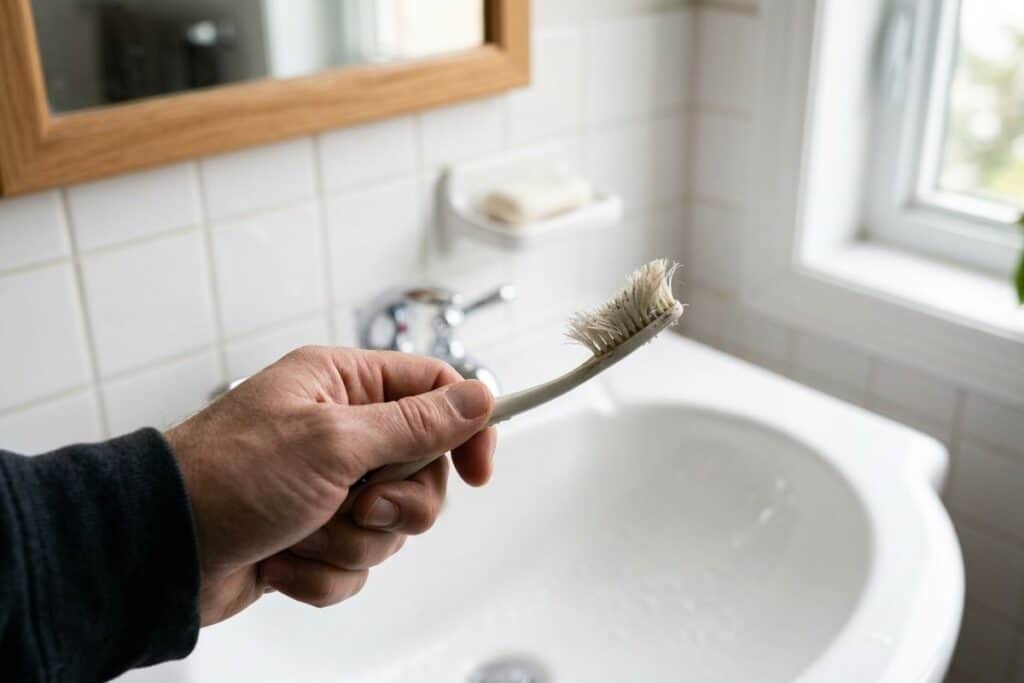
The bristles on a manual brush start to break down around the 3-to 4-month mark. If you tend to scrub hard or grip the brush tightly, you might notice the bristles spreading out before then. When that happens, reach for a new one.
Electric Toothbrush Heads
Electric brush heads have shorter bristles, so they wear down faster. Plan to replace the head every 3 months. An electric head collects the same germs and food bits as a manual brush, so the same timeline math applies even though the head is smaller.
Signs You Need a Fresh Toothbrush
Sometimes your brush asks for retirement before the 3 months are up. Here are the signs to watch for:
- Bristles splay out past the base of the brush head.
- Bristles stay curved or feel very soft and floppy.
- You dropped the brush, chewed on it, or used it while you were sick.
If any of these sound familiar, grab a new brush and move on.
What Happens When You Keep an Old Brush
A worn brush does less work than a fresh one, and the difference adds up fast. Old, bent bristles slide over your teeth instead of sweeping plaque away.
That leftover plaque sits along your gumline and between your teeth. Over time, that buildup can lead to decay and gum trouble that takes more than a brush to fix.
Frayed bristles can also scrape at your enamel and irritate your gums. So an old brush can do more harm than the clean feeling it gives you. Our team at South Ancaster Family Dental can check for early signs of wear during your visit.
How to Care for Your Toothbrush Between Swaps
A few simple habits help your brush stay clean and do its job until the next swap.
Daily Habits That Help
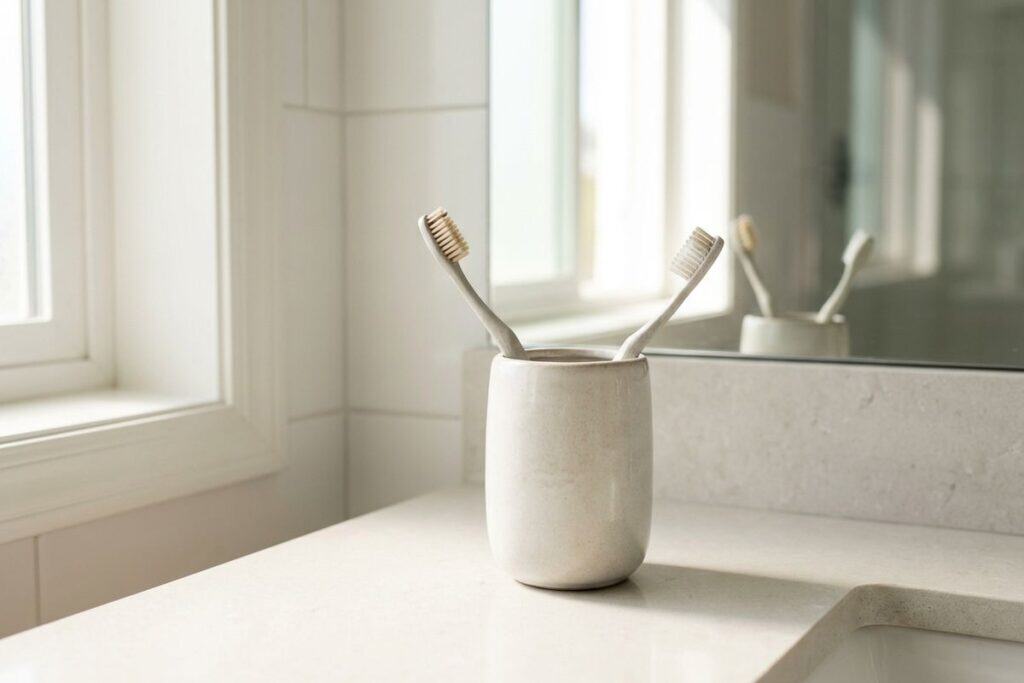
Rinse the brush well under running water after every use to clear away toothpaste and food. Store it upright in an open holder so the bristles can air dry. Skip closed travel cases for daily storage, since a damp, sealed space lets germs grow, and never share a brush with anyone in the house.
The 2-2-2 Rule for Families
The 2-2-2 rule is a simple way to keep your family’s dental health on track. The rhythm is straightforward: brush for two minutes, twice a day, and make sure to see your dentist twice a year. By booking a visit for everyone in the family at once, you can catch small problems early and keep the routine easy for kids and adults alike.
Come See Us
A fresh toothbrush and steady habits go a long way toward healthy smiles at home. When you are ready for a cleaning or a routine exam, our team at South Ancaster Family Dental can help. Call today to book an appointment for your family.