
Why Does My Breath Smell Even After Brushing?
Key Takeaways
- Brushing alone doesn’t reach all the bacteria in your mouth.
- Foods like garlic and onions affect breath from the inside out.
- Dry mouth, smoking, and alcohol can all make odour worse.
- Sometimes bad breath comes from your sinuses or digestive system.
- Flossing, tongue scraping, and staying hydrated can make a noticeable difference.
- Persistent bad breath is worth mentioning to your dentist.
What’s Actually Causing the Smell
You brush your teeth twice a day, maybe even rinse with mouthwash, but your breath still isn’t as fresh as you’d expect. It’s a frustrating experience, and you’re not alone in dealing with it. South Ancaster Family Dental sees this concern come up regularly, and there are real, identifiable reasons behind it. Taking a closer look at what’s going on can help you take the right steps toward lasting freshness, starting with your dental care routine.
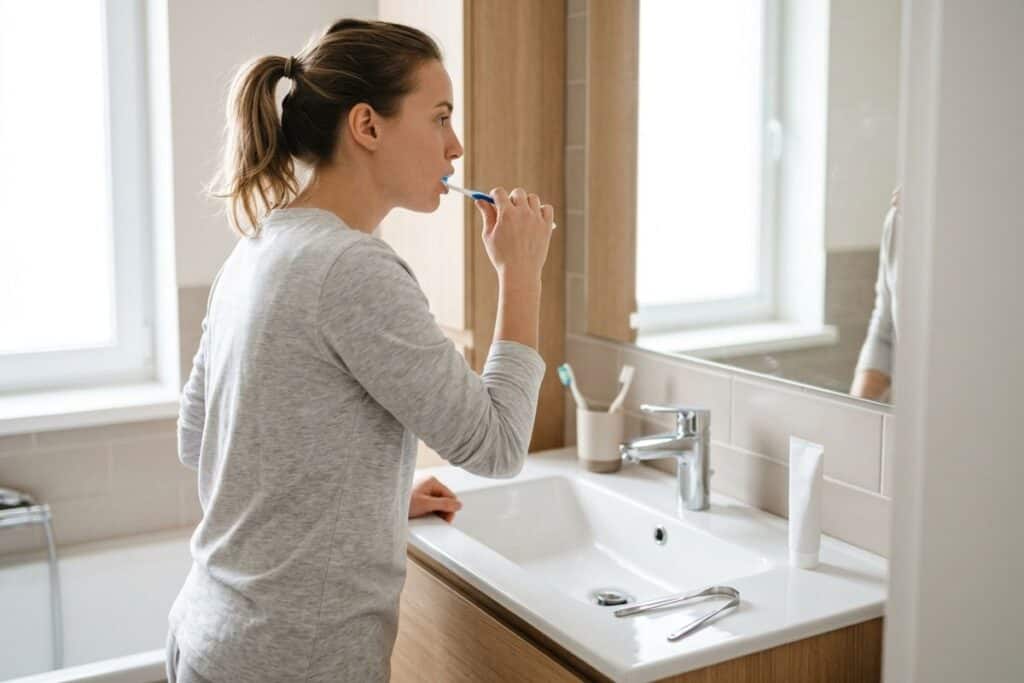
Bad breath that sticks around after brushing is usually caused by bacteria hiding in places your toothbrush can’t reach, like gum pockets, cavities, and the surface of your tongue. These bacteria break down food particles and release odorous compounds that brushing alone doesn’t eliminate. Leftover food trapped between teeth or under the gumline keeps feeding them throughout the day.
Dry mouth also plays a role. Saliva naturally rinses your mouth and keeps bacterial growth in check. When saliva flow drops, whether from medication, mouth breathing, or not drinking enough water, bacteria multiply faster and odour builds up more quickly.
Foods, Habits & Lifestyle Factors
Foods That Linger After Brushing
Some foods cause bad breath in a way that brushing simply can’t fix. Garlic and onions, for example, get absorbed into your bloodstream after digestion. From there, they travel to your lungs and come out with every breath you take. No amount of toothpaste reaches that.
Strong spices can have a similar effect. If you’ve noticed your breath smells hours after a meal even though you brushed right after eating, the food has likely already made its way past your mouth. The odour fades on its own as your body processes it, but it can take time.
Smoking & Alcohol
Tobacco smoke leaves a distinct odour that clings to your mouth, throat, and lungs. Beyond the smell itself, smoking raises your risk of gum disease, which is one of the more common causes of chronic bad breath.
Alcohol dries out your mouth by reducing saliva flow. Less saliva means more bacteria, and more bacteria means more odour. Alcohol-based mouthwashes can actually do the same thing, leaving your mouth drier than before you rinsed.
When It’s Not Coming From Your Mouth
Sinus & Throat Issues
If your mouth hygiene seems solid but the smell persists, the source might not be your teeth at all. Postnasal drip, which happens when mucus from your sinuses drips down into your throat, carries bacteria with it. That bacteria can cause odour that originates in your throat rather than your mouth.
Sinus infections and colds are common triggers for this. You might notice your breath smells different when you’re sick, and that’s often why. Once the infection clears, the odour usually fades along with it.
Digestive & Health Conditions
Acid reflux pushes stomach contents back up toward your mouth, and that can create a sour or unpleasant smell. It doesn’t always come with noticeable heartburn, so some people don’t connect the two right away.
Certain health conditions can also shift the balance of bacteria in your body, which affects your breath. Halitosis from non-dental sources is more common than many people realize, and it’s worth bringing up with a healthcare provider if you suspect something beyond dental hygiene is contributing.
Simple Steps to Help at Home
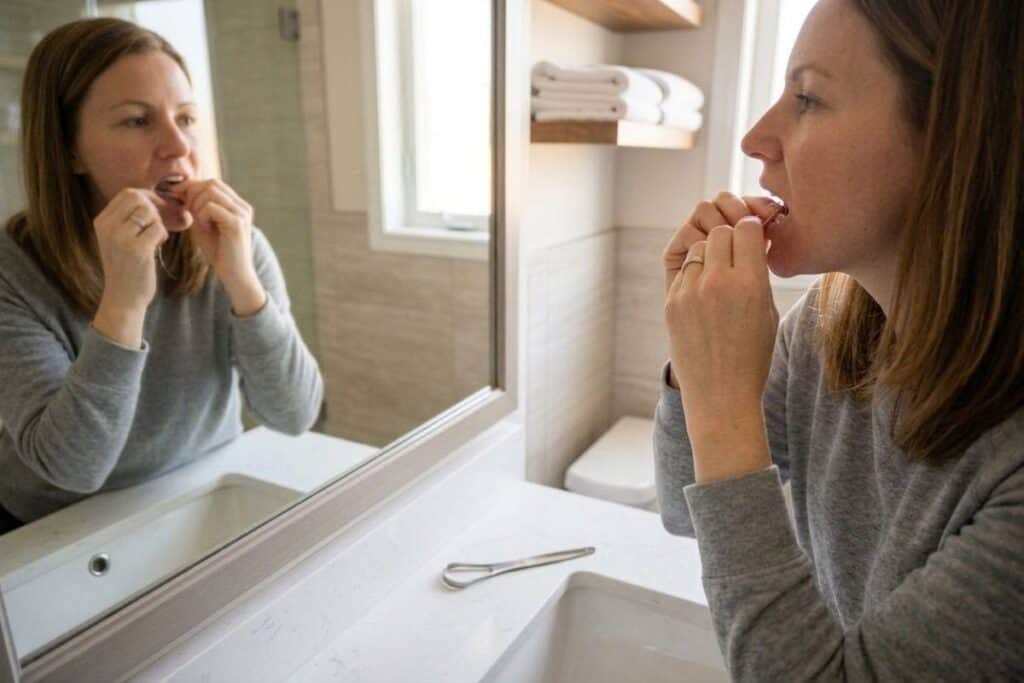
A few adjustments to your daily routine can go a long way toward fresher breath. Brushing for a full two minutes, flossing daily, and scraping your tongue each morning removes far more bacteria than brushing alone.
- Brush for two minutes, twice a day, and don’t skip the tongue.
- Floss once a day to clear food and bacteria from between teeth.
- Drink water consistently throughout the day to support saliva flow.
- Choose an alcohol-free mouthwash with antibacterial properties.
Staying hydrated is one of the simplest changes you can make. Sipping water throughout the day keeps your mouth moist and helps rinse away the bacteria that cause odour between brushing sessions.
When to See a Dentist in Hamilton
Signs It’s Time for a Checkup
If you’ve improved your routine and the smell isn’t going away, that’s a good signal to book an appointment. Some causes of bad breath, like early gum disease or tooth decay, aren’t something home care alone can address.
- Bad breath that continues despite better hygiene habits
- Bleeding or swollen gums
- Loose teeth or gum sensitivity
- Chronic dry mouth that doesn’t improve with more water
How a Dentist Can Help
A professional cleaning removes plaque and tartar from areas your toothbrush can’t reach. Since that buildup is a common source of odour, clearing it away can make a noticeable difference.
If gum disease is present, early treatment can stop the odour at the source before it progresses further. Regular checkups with a dentist can also catch cavities and other issues that contribute to bad breath before they become bigger problems.
Persistent bad breath usually has a clear cause, and finding it is faster with a dentist’s help. Book a checkup at South Ancaster Family Dental, and we’ll figure out what’s going on and what to do about it.