
What Happens If You Don’t Replace a Missing Tooth?
Key Takeaways
- A missing tooth affects your jaw bone, bite, and neighbouring teeth, not just your smile.
- Bone loss can begin within the first year after a tooth is lost.
- Waiting longer can limit your tooth replacement options.
- Dental implants, bridges, and dentures are all available options depending on your needs.
Losing a tooth can feel like a minor inconvenience at first, especially if it’s in the back of your mouth where no one can see it. But the gap left behind does more than change your smile. Over time, the effects spread to your jaw, your nearby teeth, and even the shape of your face. South Ancaster Family Dental sees this progression regularly, and the pattern is consistent regardless of which tooth was lost. The team’s restorative dentistry services are designed to address these issues at any stage.
If you don’t replace a missing tooth, you risk losing jaw bone, having your teeth shift out of place, and developing bite problems that get harder to fix the longer you wait. The good news is that replacement options are available, and acting sooner rather than later keeps more of those options within reach.
Why a Missing Tooth Is More Than a Gap
It’s easy to think of a missing tooth as purely a cosmetic issue. But your teeth work as a system, and every tooth plays a role in keeping that system balanced. When one tooth is gone, the others feel it.
Your bite, your jaw bone, and the teeth on either side of the gap all start to change after a tooth is lost. These changes happen gradually, which is why many people don’t notice them at first. By the time the effects become obvious, the process has already been going on for a while. Dental restorations exist precisely because these changes are predictable and worth addressing early.
The Real Consequences of Leaving a Gap Untreated
Bone Loss Below the Surface
Your jaw bone stays strong because your tooth roots stimulate it every time you chew. When a tooth is gone, that stimulation stops, and the bone in that area begins to shrink. Some estimates suggest you can lose up to 25% of bone in that area within the first year alone.
This matters a great deal if you’re considering a dental implant later on. Implants require a certain amount of healthy bone to anchor into. If too much bone has already been lost, you may need additional procedures before an implant becomes possible.
Shifting Teeth & Bite Problems
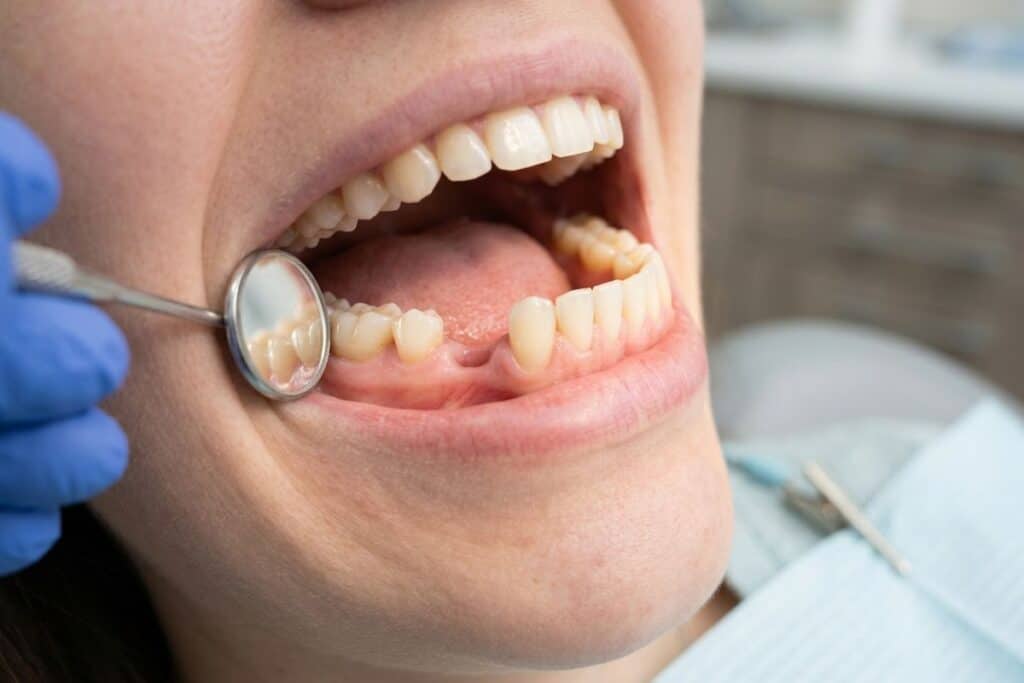
The teeth next to your gap don’t stay put. Without a neighbour holding them in place, they slowly drift toward the open space. The tooth above or below the gap can also move up or down over time.
As your teeth shift, your bite changes with them. You might notice uneven wear on certain teeth, soreness in your jaw, or tension in your face. For some people, this leads to chronic jaw pain or recurring headaches that seem unrelated to their teeth at first. Your options for replacing missing teeth are worth exploring early on to help prevent this chain of effects from taking hold.
Changes to Your Face & Speech
Your teeth and jaw bone give your face its structure. When bone shrinks and teeth shift, the support under your cheeks and lips changes too. You might notice your cheeks look a bit sunken, or that fine lines around your mouth become more noticeable.
A missing tooth can also make certain sounds harder to pronounce clearly. Chewing becomes less comfortable as well, which can lead some people to avoid certain foods and, over time, affect the variety in their diet.
How Long You Can Wait Before Replacing a Tooth
There’s no hard deadline, but the timeline matters more than many people expect. Bone loss starts fairly quickly after a tooth is lost, and the longer the gap remains, the more the surrounding teeth have a chance to shift.
Waiting can also narrow your options. Some treatments that work well early on may no longer be straightforward after significant bone loss has occurred. Acting sooner gives a dentist more flexibility when it comes to finding a solution that fits your situation. Booking a dental exam is a simple way to get a clear picture of where things stand.
Your Tooth Replacement Options at a Glance
Dental Implants
A dental implant replaces both the root and the visible tooth. A small titanium post is placed into the jaw bone, which helps preserve the bone over time. It functions much like a natural tooth, and day-to-day care is straightforward.
Dental Bridges
A dental bridge fills the gap by anchoring an artificial tooth to the teeth on either side. No surgery is required, and a bridge can restore your bite and appearance in a relatively short amount of time. It’s a practical choice for many people, and you can learn more about how dental bridges work to decide if it fits your situation.
Dentures
Dentures are a removable option that works well when multiple teeth are missing. They’re custom-fitted to your gums and tend to be more affordable upfront compared to other options. Modern dentures are designed to fit comfortably and look natural.
How to Choose the Right Option for You
The right replacement depends on several factors, including how much jaw bone you have, how many teeth are missing, and what fits your budget. There’s no one-size-fits-all answer, which is why a conversation with a dentist is the most helpful place to start.At South Ancaster Family Dental, the team takes the time to assess your specific situation and walk you through options that make sense for you. If you’re in the Ancaster or Hamilton area and have a missing tooth you’ve been putting off addressing, reaching out to our team is a straightforward first step toward protecting your smile and your long-term oral health.