
Scaling and Root Planing vs. Regular Cleaning: What’s the Difference?
When you visit your dentist for your twice-yearly regular cleaning, you may hear them mention something about “root planing.” The word may sound more serious than your usual polishing appointment, so you may wonder what changed. Maybe your gums have been bleeding when you brush, or perhaps your dental team measured deeper pockets around your teeth during your exam.
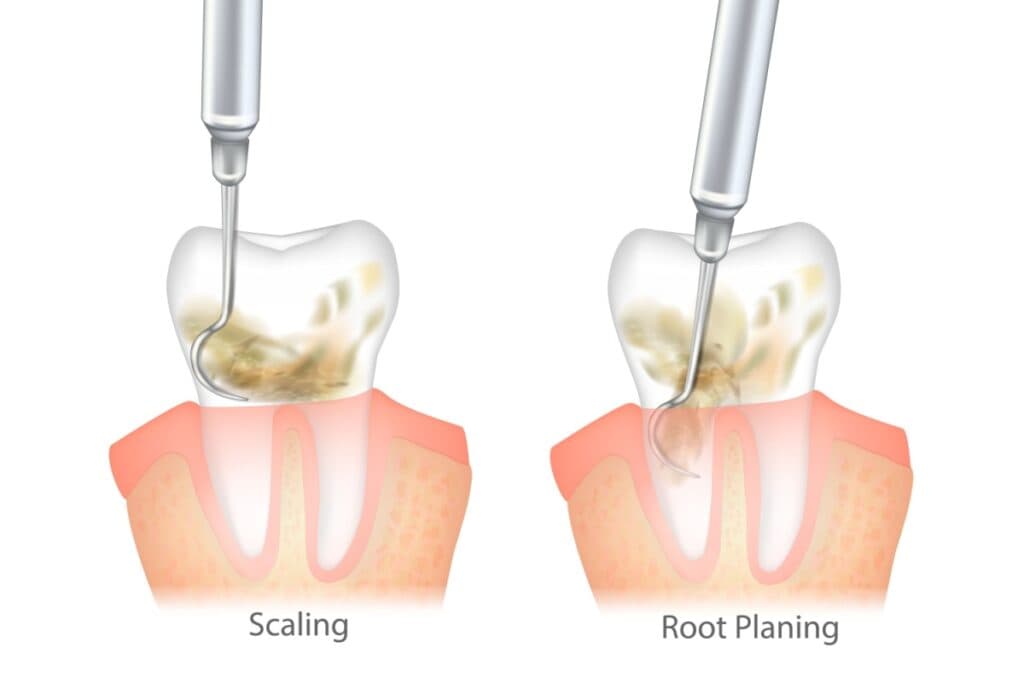
Root Planing is a deeper cleaning procedure that removes tartar buildup below your gum line, while regular cleanings focus on plaque and tartar removal from visible tooth surfaces above the gums. Your dentist may recommend root planing when you have signs of gum disease that require more thorough treatment than a standard cleaning.
Both procedures involve scaling (removing tartar), but a root planing session goes deeper to treat gum disease. Your dentist may recommend root planing when you have signs of gum disease that require more thorough treatment than a standard cleaning.
What Happens During Your Regular Dental Cleaning
Your routine dental cleaning targets the surfaces you can see when you smile. A dental hygienist uses special tools to remove buildup since your last visit, even in spots your toothbrush cannot reach easily.
A typical cleaning includes:
- Scaling to remove plaque and tartar from tooth surfaces
- Polishing to remove surface stains
- Flossing between teeth
- Fluoride treatment application
This type of cleaning keeps your teeth healthy when your gums are in good condition. You should feel your teeth become smooth and clean with minimal sensitivity afterward.
When Your Dentist Recommends Root Planing
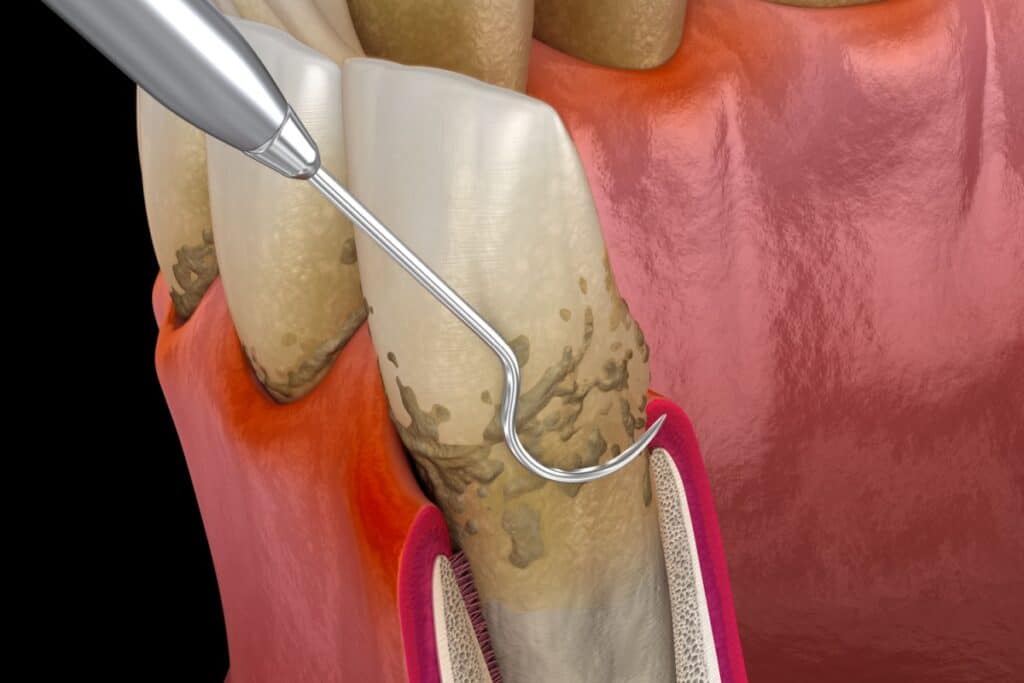
Root planing becomes necessary when bacteria and tartar have moved below your gum line, creating pockets where your toothbrush and floss cannot reach. This deeper cleaning addresses the root cause of gum disease before it progresses to more serious stages.
Your dentist might recommend root planing if you have:
- Tartar buildup below the gum line
- Pocket depth measurements above normal range
- Bleeding or swollen gums
- Persistent bad breath that doesn’t improve with brushing
A healthy pocket depth around your teeth typically ranges from 1 to 3 millimetres. Depths of 4 millimetres or more often indicate the need for root planing treatment.
How Scaling and Root Planing Works and What to Expect
The root planing procedure goes much deeper than a regular cleaning. Your dental team works below the gum line to remove bacteria and tartar from tooth roots, areas you cannot see or clean at home.
The treatment typically involves:
- Numbing the treatment area
- Removing tartar below gum line
- Smoothing tooth root surfaces
Root planing appointments usually take longer than regular cleanings. This could be a single session lasting 60 to 90 minutes, or multiple shorter visits. Your dental team can apply numbing gel or a local anesthetic to keep you comfortable during the deeper cleaning process.
Key Differences Between Scaling and Root Planing and Regular Cleanings
Both regular cleanings and scaling and root planing involve removing tartar, but they work at different depths. Regular cleanings work on tooth surfaces above the gum line, the parts you see when you look in the mirror. Root planing reaches below the gum line into the pockets where gum disease bacteria hide and multiply, then smooths the tooth roots to help gums reattach.
Think of regular cleaning as washing the visible parts of your car, while root planing is like cleaning under the hood where problems develop out of sight.
You typically need regular cleanings every 6 months as preventive care. Your dentist may recommend scaling and root planing when gum disease symptoms appear. Those with gum disease might need follow-up scaling and root planing treatments every 3 to 4 months until gum health improves.
Signs You Might Need Deep Scaling and Root Planing
Your mouth often gives clear signals when surface cleaning is not enough anymore. These symptoms indicate bacteria have moved below your gum line, where only deep scaling and root planing can reach them:
- Persistent bad breath
- Red, swollen, or tender gums
- Bleeding when brushing or flossing
- Gums pulling away from teeth
- Loose or shifting teeth
You might notice these changes gradually, or they could appear suddenly during times of stress or illness when your immune system is working harder.
A dentist can use thin probes to measure the space between your tooth and gum, looking for areas where bacteria might be hiding below the surface. Healthy gums fit snugly around your teeth with shallow pockets. Deeper measurements could indicate areas that need deep scaling and root planing treatment to remove bacteria and tartar buildup.
X-rays can also show your dental team what is happening below the gum line. Combined with visual examination, these tools help determine whether you need an additional scaling and root planing session.
Recovery and Care After Deep Scaling and Root Planing
Your gums can feel tender for a few days after deep scaling and root planing, and some bleeding when you brush is normal as your gums heal and tighten around your teeth. The tenderness decreases each day as your gums recover from the deep cleaning. Most people return to normal eating and oral care within 24 to 48 hours.
Gentle care helps your gums heal properly. Depending on the extent of your treatment, you may need to follow specific care instructions:
- Gentle brushing techniques
- Special rinses or medications
- Foods to avoid temporarily
Following these guidelines helps your gums heal and prevents future buildup below the gum line.
Schedule Your Dental Cleaning
Catching gum disease early makes all the difference. At South Ancaster Family Dental, we’ll evaluate your gum health and provide the level of cleaning you need, whether that’s a regular cleaning or deep scaling and root planing.
Call our office or fill out the form to book your appointment today.