
6 Tips for Dental Implant Aftercare
Getting dental implants is a big step toward restoring your oral health. Because they look and function much like natural teeth, dental implants can improve eating, speaking, and overall well-being. But your investment in dental health doesn’t stop when you leave the chair. Proper aftercare is important to reduce your risk of complications.
Best practices for dental implant aftercare include taking medication as directed, sticking to gentle foods, and learning how to spot the signs of a potential complication. Most importantly, follow your dentist’s instructions carefully. The following is general information, but depending on your personal circumstances, your dentist may offer more detailed instructions.
A Review of the Dental Implant Process
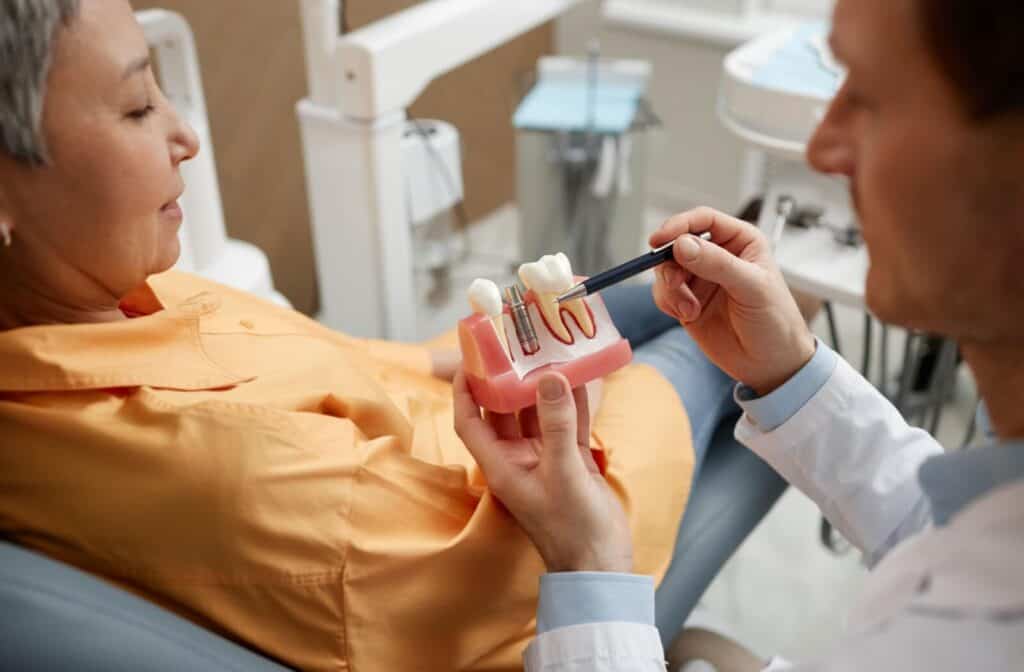
A dental implant is a titanium “root” placed directly into your jawbone, where it fuses with your natural bone. This creates a stable foundation for an artificial tooth that looks and functions like a natural tooth.
Here’s a brief summary of the implant process:
- Initial assessment: Your dentist examines your mouth, reviews X-rays, takes an impression and determines if your gums and bones are healthy enough for an implant.
- Placing the implant: The titanium implant is surgically inserted into your jawbone underneath your gums. Then, the incision is stitched back together.
- Osseointegration: The jawbone grows around the implant in a process called osseointegration. This can take 3 to 9 months, perhaps longer, depending on the patient.
- Attaching the abutment: A post called an abutment is attached to the implant. Sometimes, this can be done in the same appointment as the initial implant.
- Attaching the tooth: Finally, an artificial replacement tooth is attached to the abutment. This may take multiple appointments.
6 Dental Implant Aftercare Tips
If taken care of properly, dental implants can last for life. However, they do require commitment. Start taking proactive care of your implants after your procedure.
1. Follow Your Dentist’s Instructions
This may include detailed instructions on how to clean the area, prescriptions for medication, and advice on eating or drinking. Your dentist may also recommend specific products and provide a timeline of what to expect. Ignoring your dentist’s instructions may put you at greater risk for infection, pain, and delayed healing.
Everyone is unique, so discuss with your dentist how to best care for yourself based on your personal health requirements.
2. Keep It Clean
It’s important to keep implants clean, just as you would with your natural teeth. Floss after your gums have healed. You can also ask your dentist for recommendations for a good antibacterial rinsing solution to help avoid infections.
Dental implants also require consistent, ongoing care, including regular dental cleanings. Remember to schedule general cleanings going forward.

3. Don’t Smoke
Smoking may affect whether the bone successfully fuses to the implant. Besides increasing your risk of complications after a surgical procedure, smoking poses a risk to oral health in general.
If you smoke and are interested in dental implants, have a conversation with your doctor and dentist. They can recommend cessation tools, other options, and resources.
4. Avoid Certain Foods
Immediately after surgery, your mouth will be sensitive. Stick to soft foods such as yogurt, mashed potatoes, and ice cream for the first several days or as long as your dentist recommends. Also, avoid hot foods and beverages (like soup), as well as sticky, hard, or crunchy foods.
5. Take Medication as Directed
Pain and swelling are normal after dental implant surgery. Your dentist may prescribe pain relievers or recommend over-the-counter pain medication. Take this medication as directed. You should also inform your dentist about any medications you’re taking for existing health conditions to reduce the risk of adverse drug interactions.
6. Learn the Signs of a Potential Complication
Like any other medical procedure, a dental implant has risks. Contact your dentist right away if you experience symptoms like:
- A wobbly, loose, or mobile implant
- Pain and swelling that lasts longer than a week
- Discharge from the site
- Bleeding, swollen, or inflamed gums
- Fever
- Lymph nodes in the neck that are swollen
Other Things to Know
In addition to these tips, keep the following in mind:
- Implants are not suitable for everyone: If you have poor jawbone structure, you may need a bone graft to make it strong enough to hold the implant.
- Implants take time: You may need multiple appointments over multiple months.
- Implants need ongoing care: Regular brushing, flossing, and dental visits are vital.
Dental Implants at South Ancaster Family Dental
Dental implants closely resemble and function like natural teeth, enhancing your ability to eat, speak, and smile with ease. They are also a durable option. With proper care and maintenance, your dental implants can last for the rest of your life.If you’re interested in dental implants in Hamilton, talk to us at South Ancaster Family Dental. We offer dental implant services along with other restorative dentistry options for missing teeth. Contact us and book an appointment today.